

Executive Summary
Commercial real estate faces a persistent challenge: billing disputes over after-hours HVAC and demand response services that strain landlord-tenant relationships and delay cost recovery. This article explores how transparent billing systems, regulatory compliance (particularly NYC LL88), and smart metering technologies can eliminate disputes while accelerating cash collection and supporting demand response participation. In practice, booking automation prevents last-minute, off-channel requests, enforces advance-notice rules, and creates an auditable trail from request to invoice—reducing leakage and disputes. The examples and pricing structures presented are illustrative—actual programs vary by utility and region.
Regulatory Snapshot
| NYC LL88: Tenant spaces over 5,000 square feet must be submetered with monthly statements; compliance centered on January 1, 2025. LL88 reporting is submitted via the BEAM portal; DOB indicates a May 1, 2025 filing deadline for LL88 reports (fee applies) (NYC DOB, 2025a; NYC DOB, 2025b). |
| California: SB 253 requires large companies to disclose Scopes 1-3 GHG emissions (not submetering) (California Legislature, 2023); Title 24, Part 6 §130.5 (nonresidential) includes mandatory service/feeder metering and monitoring provisions that influence electrical distribution design and device selection (Energy Code Ace; California Energy Commission, 2022). |
In the rapidly evolving commercial real estate landscape, facility managers, property owners, and building engineers face mounting pressure to optimize energy usage while maintaining tenant satisfaction. Yet despite technological advances in building automation and demand response (DR) programs, one persistent challenge threatens to undermine these efforts: billing disputes between landlords, tenants, and service integrators (SIs) over after-hours HVAC and energy management services.
These disputes often arise from billing leakage, where after-hours HVAC and lighting is unaccounted for, the building ends up paying for it and loses revenue. The result? Strained relationships, delayed cost recovery, and missed opportunities for energy savings that benefit all stakeholders.
The Hidden Cost of Billing Opacity
The traditional approach to after-hours billing creates a perfect storm of inefficiency and distrust. In portfolios that rely on manual submeter reads, cost recovery commonly lags the billing period by 30-45 days due to data collection and reconciliation steps (Enertiv, 2025). This delay isn’t just about cash flow—it’s symptomatic of deeper systemic issues that plague the industry.
Consider the typical scenario: A tenant needs after-hours HVAC service for an urgent project. Many properties ask for approximately 24 hours’ advance notice for after-hours HVAC so staff can schedule and bill accurately; last-minute phone-in requests often bypass systems and create billing leakage (The Old Post Office, 2025; 315 PAS, 2021). When unexpected needs arise, tenants often circumvent official channels, calling property management directly or relying on security staff—creating unbillable service events that erode building profitability.
The problem extends beyond simple cost recovery. Manual submeter reading and billing is fraught with the inefficiencies of human error. Property teams spend valuable time on administrative tasks, while tenants receive bills they can’t easily verify or understand, leading to disputes that can escalate into costly legal proceedings.
The Demand Response Billing Challenge
Energy demand response programs add another layer of complexity to the billing equation. While DR programs offer significant cost savings—particularly during peak demand periods when electricity costs soar—the benefits often get lost in opaque billing structures that fail to properly allocate savings and costs among stakeholders.
Building occupancy is typically highest from early morning through late evening—meaning an office building will likely be occupied during DR events. This creates a delicate balance: buildings must reduce energy consumption during peak periods while maintaining tenant comfort, then accurately bill for the impact of these conservation measures.
The challenge becomes even more complex when considering tenant-specific demand response participation. DR settlements and program designs seek to align customer incentives with load reduction under their control. However, without transparent billing mechanisms, tenants have little incentive to participate actively in DR programs, limiting the potential for energy savings across the portfolio (Waypoint Energy, 2017).
Sample Line Items: Building Transparency Through Detail
The key to eliminating billing disputes lies in granular, real-time transparency. Modern property management platforms can provide tenants with detailed line-item billing that clearly shows:
After-Hours HVAC Billing Components:
- Base hourly rate per zone activated: $45.00/hour
- Peak period surcharge (example window: 4–9 PM): $15.00/hour
- Weekend/holiday premium: $20.00/hour
- Minimum activation fee: $25.00
- Energy consumption rate: $0.12/kWh
- Administrative processing fee: $5.00
Demand Response Billing Elements:
- Baseline energy cost: $2,850.00
- DR event participation credit: -$342.00
- Peak demand reduction credit: -$125.00 (e.g., $X/kW × verified kW reduction)
- Event non-compliance charge / forfeited credit (program-specific): $75.00 (illustrative)
- Net tenant responsibility: $2,458.00
Illustrative only—peak windows and DR settlements vary by utility and tariff (e.g., many CA TOU plans peak 4–9 PM; SCE BIP pays monthly $/kW-month capacity credits; PG&E PDP applies event-hour charges) (Southern California Edison, 2024; PG&E, 2025).
A modern platform can account for the language and terms of lease agreements and let tenants approve charges at the point of request. It then generates easy-to-understand invoices with a complete audit trail. This level of detail transforms billing from a black box into a transparent accounting of actual services provided and energy consumed.
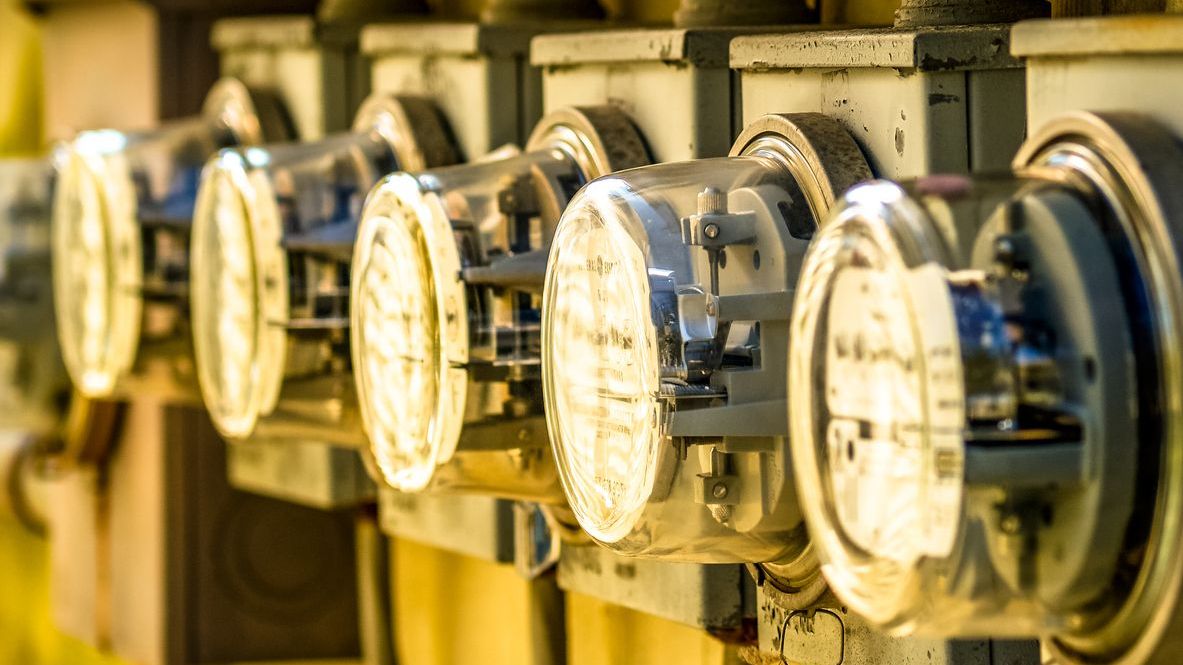
Smart Metering Options: The Foundation of Trust
Successful transparent billing starts with accurate measurement. Property owners have several metering options, each with distinct advantages:
Metering Technology Comparison
| Technology | Data Collection | Communication | Best Use Case |
| Standalone submeters (manual reads) | Manual reads | One-way | Basic cost allocation |
| AMR (Automated Meter Reading) | Periodic/automated | One-way | Reduced labor, periodic billing |
| AMI (Advanced Metering Infrastructure) | Near-real-time | Two-way | Transparent, time-sensitive billing |
Submeters are measurement devices that can be read manually or integrated into AMR/AMI systems.
Individual Submeters Submeters divide this usage between floors and units, so you can bill tenants on utilities they actually use. For after-hours billing, individual submeters provide the highest level of accuracy and tenant confidence. Installed costs vary widely by approach: low-cost electrical submeters approximately $200/point, custom electrical submetering historically $800–$2,000/point, and AMI often $2,000–$10,000 per meter plus integration (accuracy class and CTs affect price; revenue-grade components cost more but reduce disputes) (GSA, 2025).
Smart Panel-Level Monitoring For buildings where individual submetering isn’t feasible, smart panel monitoring offers a middle-ground solution. These systems can track energy usage by floor or zone, providing sufficient granularity for fair cost allocation while maintaining cost-effectiveness.
Automated Meter Reading (AMR) Automates reads but typically provides one-way, periodic data collection.
Advanced Metering Infrastructure (AMI) Two-way communications and interval data; enables near-real-time transparency and remote functions. For after-hours billing, AMI systems eliminate the human error factor while providing near-real-time usage data (U.S. DOE, 2016; FERC, 2023; EPA WaterSense).
The Dispute-Prevention SLA Bundle
Forward-thinking property management companies are packaging comprehensive Service Level Agreements (SLAs) that address billing transparency proactively. Example SLA bundle (illustrative—actual commitments vary by provider, building, and union/JSA constraints):
Billing Accuracy Guarantee
- 99.5% billing accuracy commitment
- Independent third-party meter verification
- Automatic credits for billing errors exceeding $50
Response Time Standards
- After-hours service activation: 15 minutes maximum
- Billing inquiry response: 2 business hours
- Dispute resolution: 5 business days
Transparency Requirements
- Real-time usage dashboards for all tenants
- Monthly usage reports with year-over-year comparisons
- Quarterly energy efficiency recommendations
Technology Standards
- Mobile-accessible tenant portals
- Integration with existing property management systems
- Data export capabilities for tenant energy management
- Automated request-to-activation workflow with audit trail (request → approval → run-time → invoice)
- API access for exports to property accounting/tenant portals
This open line of communication, coupled with detailed, visible recordkeeping, eliminates disputes and potential lawsuits while ensuring that bills are honored equitably and honestly on both sides.

Booking Automation: Closing the Request-to-Invoice Gap
Most billing friction starts before a meter ever records energy: requests arrive by phone or email, advance-notice rules are missed, and details never enter the billing system. A lightweight booking layer in front of the BMS fixes this by (1) standardizing requests (who, where, when, how long), (2) previewing estimated costs before submission, (3) enforcing 24-hour advance-notice (with documented exceptions), and (4) writing immutable logs—activation, run-time, approvals—into the audit trail used for invoicing. The result is fewer off-system activations, cleaner allocations, and faster, lower-friction collections (The Old Post Office, 2025; 315 PAS, 2021).
What “good” automation looks like (capabilities, not claims):
- Web/mobile request with cost preview before approval
- Role-based approval windows (e.g., manager after 6 pm; security on weekends)
- Auto-schedule to BMS by zone/equipment; cancel/shorten with logged time-stamps
- Run-time verification (interval data) tied to the request ID
- API exports to property accounting/tenant portals for line-item invoices
- Exception handling (emergency overrides with reason codes)
Example Implementation: 7NOX
7NOX is a cloud-based automation app used by system integrators to streamline after-hours HVAC bookings. It provides request forms with cost previews, role-based approvals, scheduled activations to the BMS, and auditable logs that feed line-item billing. Use cases include enforcing 24-hour notice windows, documenting exceptions, and tying verified run-time to invoices. (Disclosure: 7NOX is developed by the authors’ organization and is offered here as an example; comparable approaches exist.) (7NOX, 2025)

Implementation Roadmap: Making the Transition
Successfully transitioning to transparent billing requires careful planning and stakeholder buy-in. Property teams should consider this phased approach:
Phase 1: Infrastructure Assessment (Months 1-2) Evaluate existing metering infrastructure and identify gaps. Transition to a dynamic invoicing process, so you can easily prorate bills for exact move-in and move-out dates. This assessment should include both hardware capabilities and software integration requirements.
Phase 2: Technology Selection and Installation (Months 3-6) Choose metering and billing software that integrates with existing building management systems. Some vendors integrate with existing BMS hardware. This approach minimizes disruption while maximizing the value of existing investments. Evaluate a booking automation layer that integrates with your BMS and property systems; pilot on one floor/zone to validate request logging, advance-notice enforcement, and invoice line-item generation.
Phase 3: Tenant Education and Rollout (Months 7-8) Property managers may use submeter billing as an opportunity to educate tenants about sustainable practices and offer tips on reducing utility consumption. Successful implementations include comprehensive tenant education programs that highlight the benefits of transparent billing.
Phase 4: Continuous Optimization (Ongoing) Monitor system performance, gather tenant feedback, and refine processes. The transparency that comes with this method of reading and billing helps encourage tenants to reduce consumption.

The ROI of Transparency
While implementing transparent billing systems requires upfront investment, the financial benefits extend far beyond simple cost recovery. Eliminating billing leakage can materially increase recovered revenue by closing process gaps in after-hours services.
Additional benefits include:
- Reduced property management labor costs through automation
- Improved tenant retention through enhanced satisfaction
- Increased property values through modern infrastructure
- Enhanced energy efficiency through tenant engagement
By making your overtime HVAC program more flexible and user-friendly, more tenants will properly submit requests and increase the revenue for the building.
Looking Forward: The Future of Energy Billing
As the commercial real estate industry faces increasing pressure to meet sustainability goals and regulatory requirements, transparent billing will transition from competitive advantage to business necessity. NYC LL88 requires submeters for tenant spaces over 5,000 square feet in covered buildings and monthly statements (compliance centered on January 1, 2025). California SB 253 requires large companies to disclose Scopes 1-3 GHG emissions; it does not mandate tenant submeters. Properties that proactively implement transparent billing systems will be better positioned to comply with evolving regulations while maintaining tenant satisfaction.
The integration of artificial intelligence and machine learning into billing systems promises even greater transparency and accuracy. Future systems will predict tenant energy needs, automatically optimize demand response participation, and provide proactive recommendations for cost savings.
Energy Terms Reference
- kW (kilowatt): instantaneous demand—the rate of energy use at a moment.
- kWh (kilowatt-hour): energy consumed over time.
Understanding these terms helps tenants better interpret their bills and identify opportunities for cost savings.
Conclusion: Building Trust Through Transparency
The path to eliminating billing disputes isn’t just about technology—it’s about fundamentally reimagining the relationship between property managers, tenants, and service providers. By proactively addressing submetering details in the lease agreement, landlords can help ensure a smooth and mutually beneficial process for billing utilities to tenants (Shull, 2023).
Transparent after-hours and demand response billing creates a foundation of trust that benefits all stakeholders. Tenants gain control over their energy costs and consumption patterns. Property managers reduce administrative burden while improving cost recovery. Building engineers can focus on optimization rather than dispute resolution.
The question isn’t whether your property can afford to implement transparent billing—it’s whether you can afford not to. In an increasingly competitive market where tenant satisfaction and energy efficiency drive value, transparency isn’t just good practice—it’s good business.
Works Cited
- New York City Department of Buildings. (2025a) “LL88: Lighting System Upgrades & Sub-metering.” NYC DOB, 2025, https://www.nyc.gov/site/buildings/codes/ll88-lighting-system-upgrades-sub-meter-installation.page. Accessed 13 Aug. 2025.
- New York City Department of Buildings. (2025b) “LL88 Filing Requirements.” NYC DOB, 2025, https://www.nyc.gov/assets/buildings/pdf/ll88_filing_requirements.pdf. Accessed 13 Aug. 2025.
- California Legislature. (2023) “SB-253 Climate Corporate Data Accountability Act.” 7 Oct. 2023, https://leginfo.legislature.ca.gov/faces/billNavClient.xhtml?bill_id=202320240SB253. Accessed 13 Aug. 2025.
- Energy Code Ace. “Section 130.5 – Electrical Power Distribution Systems.” https://energycodeace.com/site/custom/public/reference-ace-2022/index.html#!Documents/section1305electricalpowerdistributionsystems.htm. Accessed 13 Aug. 2025.
- California Energy Commission. (2022) “CEC-NRCC-ELC-E — Certificate of Compliance (Nonresidential) — §130.5 Electrical Power Distribution.” Jan. 2022, https://www.energy.ca.gov/sites/default/files/2021-06/CEC-NRCC-ELC-E.pdf. Accessed 13 Aug. 2025.
- U.S. Department of Energy. (2016) “Advanced Metering Infrastructure and Customer Systems.” 26 Sept. 2016, https://www.energy.gov/oe/advanced-metering-infrastructure-and-customer-systems. Accessed 13 Aug. 2025.
- Federal Energy Regulatory Commission. (2023) “2023 Assessment of Demand Response and Advanced Metering.” 19 Dec. 2023, https://www.ferc.gov/media/2023-assessment-demand-response-and-advanced-metering. Accessed 13 Aug. 2025.
- U.S. General Services Administration (GSA). (2025) Low-Cost Submetering Guidance for GSA. 15 Jan. 2025, https://www.gsa.gov/system/files/Low-Cost%20Submetering%20Guidance%20for%20GSA_15Jan25.pdf. Accessed 13 Aug. 2025.
- U.S. General Services Administration (GSA). “Submetering.” High-Performance Building Clearinghouse, 16 Jun. 2025, https://www.gsa.gov/governmentwide-initiatives/federal-highperformance-buildings/highperformance-building-clearinghouse/energy/submetering. Accessed 13 Aug. 2025.
- Badger Meter. “AMR vs. AMI: What’s the Difference?” 17 May 2022, https://www.badgermeter.com/blog/amr-vs-ami-whats-the-difference/. Accessed 13 Aug. 2025.
- U.S. EPA WaterSense. “Advanced Metering Infrastructure.” https://www.epa.gov/watersense/advanced-metering-infrastructure. Accessed 13 Aug. 2025.
- The Old Post Office (Chicago). (2025) Tenant Handbook. May 2025, https://post433.com/wp-content/uploads/2025/05/TOPO_TenantHandbook_May-2025-Final.pdf. Accessed 13 Aug. 2025.
- 315 PAS. (2021) Tenant Handbook. 20 Oct. 2021, https://www.221main.com/media/pdf/315_PAS_Tenant_Handbook_10.20.21.pdf. Accessed 13 Aug. 2025.
- Institute for Market Transformation (IMT). Why Landlords Should Take the Lead on Installing Submeter Technology. 2019, https://imt.org/wp-content/uploads/2019/03/LTEP-Analysis_Why-Landlords-Should-Take-the-Lead-On-Installing-Submeter-Technology.pdf. Accessed 13 Aug. 2025.
- Enertiv. (2025) “10 Things Wrong with Tenant Submetering (And How to Fix Them).” 2025, https://www.enertiv.com/resources/blog/10-things-wrong-tenant-submetering. Accessed 13 Aug. 2025.
- Building Engines. “Is Your After Hours HVAC Program Costing You?” Building Engines, 31 May 2024, https://www.buildingengines.com/blog/is-your-after-hours-hvac-program-costing-you/. Accessed 13 Aug. 2025.
- PG&E. “Residential Rate Plan Pricing (TOU overview).” 2025, https://www.pge.com/assets/pge/docs/account/rate-plans/residential-electric-rate-plan-pricing.pdf. Accessed 13 Aug. 2025.
- Southern California Edison. (2024) “Schedule TOU-BIP — Base Interruptible Program.” Effective 1 Jun. 2024, https://www.sce.com/sites/default/files/custom-files/PDF_Files/ELECTRIC_SCHEDULES_TOU-BIP.pdf. Accessed 13 Aug. 2025.
- PG&E. (2025) “Peak Day Pricing.” https://www.pge.com/en/account/rate-plans/peak-day-pricing.html. Accessed 13 Aug. 2025.
- Waypoint Energy. (2017) “4 Demand Response Strategies for Commercial Real Estate.” Waypoint Energy, 4 Aug. 2017, https://www.waypoint-energy.com/post/4-demand-response-strategies-for-commercial-real-estate. Accessed 13 Aug. 2025.
- Shull, Chris. (2023) “Submetering Utilities in Commercial Real Estate: The Importance of Clear Lease Language.” LinkedIn, 17 Aug. 2023, https://www.linkedin.com/pulse/submetering-utilities-commercial-real-estate-clear-lease-shull-cpm. Accessed 13 Aug. 2025.
- 7NOX. (2025) “7NOX — Cloud-based Automation for After-Hours HVAC Booking.” 2025, https://7nox.com/. Accessed 13 Aug. 2025.